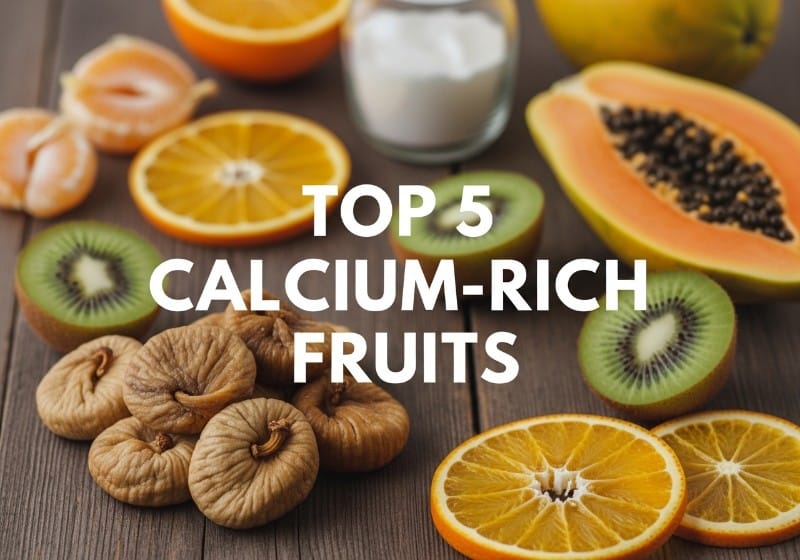
- 1.Why Calcium Matters for Bone Health
- 2.Can Fruits Be a Good Source of Calcium?
- 3.1. Figs: One of the Best Calcium-Rich Fruits
- 4.2. Oranges: More Than Just Vitamin C
- 5.3. Kiwi: A Nutrient-Dense Choice for Healthy Bones
- 6.4. Mulberries: An Underrated Source of Calcium
- 7.5. Blackberries: Calcium with Powerful Antioxidants
- 8.Nutrient Comparison Table
- 9.Other Nutrients That Help Your Body Use Calcium
- 10.Simple Ways Americans Can Eat More Calcium-Rich Fruits Every Day
Calcium-rich fruits rarely make anyone’s first list when bone health comes up. Dairy gets the credit, dairy products get the grocery budget, and fruits sit quietly in the produce aisle while the yogurt aisle gets all the attention. That’s a missed opportunity — especially if you’re eating plant-forward, dairy-free, or just trying to round out a diet that’s doing most things right but leaving some nutrients on the table.
Fruits alone won’t replace milk as a calcium source. A cup of whole milk delivers around 300 mg of calcium. The fruits on this list don’t come close to that per serving. But they do contribute meaningful amounts of calcium alongside vitamin C, vitamin K, potassium, and antioxidants — nutrients that work with calcium to support bone density, not just alongside it. For anyone building a varied, bone-friendly diet, that combination matters.
The short answer: Figs, oranges, kiwi, mulberries, and blackberries are among the best calcium-contributing fruits. They won’t replace dairy, but they provide calcium plus complementary nutrients — vitamin C, vitamin K, potassium — that support how your body actually builds and maintains bone tissue. Including them regularly is a low-effort way to strengthen any bone-health eating plan.
Key Takeaways
- Dried figs are the standout: about 5 dried figs deliver roughly 135 mg of calcium, more than any other widely available fruit.
- Vitamin C (oranges, kiwi) helps your body make collagen — the protein that forms the structural scaffold bone mineral sits in.
- Vitamin K (kiwi, blackberries) helps regulate how calcium is deposited into bone and diverted away from arteries.
- Fruits complement calcium sources — they don’t replace them. A dairy-free teen still needs to hit around 1,300 mg of calcium daily from all sources combined, per NIH guidance.
- Pairing calcium-rich foods with vitamin D is what actually closes the absorption loop. Fruit handles the calcium. Sunlight and fortified foods handle the vitamin D.
Why Calcium Matters for Bone Health
Bone isn’t static. Your body tears it down and rebuilds it constantly — a process called bone remodeling — and calcium is the primary mineral that makes up the dense matrix being rebuilt. Without adequate calcium intake, the body pulls it from bone tissue to keep blood calcium levels stable. Do that often enough, and bone mineral density drops. That’s the slow-motion origin story of osteoporosis.
The National Institutes of Health (NIH) sets the recommended daily intake for calcium at 1,300 mg for teens ages 9–18 and 1,000 mg for adults ages 19–50. Most Americans fall short. According to the Dietary Guidelines for Americans, calcium is one of the nutrients most commonly under-consumed across all age groups.
Who needs to pay closest attention? Teenagers during the peak bone-building window, postmenopausal women, and anyone limiting or eliminating dairy. The bones you build by your mid-20s largely set your baseline for the rest of your life — which makes adolescence the window that matters most for how to grow taller and for laying down the bone mass you’ll draw on for decades.
Can Fruits Be a Good Source of Calcium?
Honestly, not as a primary source. But as a meaningful contributor alongside other calcium-rich foods? Yes.
The more interesting question is whether fruits help your body use the calcium it gets — and there, the answer is clearly yes.
How Fruits Support Calcium Absorption
Vitamin C, present in oranges, kiwi, and blackberries, is required for collagen synthesis. Collagen forms the protein framework that bone mineral — mostly calcium phosphate — crystallizes onto. No collagen scaffold, no strong bone structure. That connection is often left out when people discuss calcium, but it’s a real part of the biology.
Potassium helps maintain the acid-base balance in your blood. When the body is too acidic, it pulls calcium from bone to buffer the pH. Fruits like figs, oranges, and kiwi are potassium-rich — they contribute to the alkaline load that helps spare bone calcium from being used as a buffer.
Antioxidants from berries reduce chronic low-grade inflammation. Inflammation doesn’t just make joints ache; it activates osteoclasts — the cells that break bone down — more than usual. Keeping that process in check matters for long-term bone density.
1. Figs: One of the Best Calcium-Rich Fruits
If you’re going to eat one fruit specifically for calcium, dried figs are your best bet. Fresh figs are pleasant and contain some calcium, but drying concentrates it significantly.
Nutrition Highlights
Five dried figs (about 50 g) deliver roughly 135 mg of calcium — around 10% of a teen’s daily target in a snack-sized portion. They also provide 3–5 g of fiber, a meaningful hit of potassium (~680 mg per 100 g), and natural sugars that make them genuinely palatable without added ingredients.
The fiber matters here beyond digestion. A higher-fiber diet is associated with better overall nutrient intake in children and teens, per research published in Nutrients — and kids eating more fiber tend to hit their foods that help you grow taller targets more consistently.
Easy Ways to Eat Figs
Chop them into overnight oats — the sweetness replaces any added sugar you’d otherwise reach for. Blend 2–3 into a smoothie with milk or a calcium-fortified plant milk and you’ve stacked two calcium sources. They work in trail mix, alongside cheese on a snack board, or stirred into Greek yogurt with a drizzle of honey. The flavor is sweet with a mild earthiness — nothing polarizing.
2. Oranges: More Than Just Vitamin C
Oranges contribute calcium in the 50–65 mg range per medium fruit — modest, but real. The more interesting story is what the vitamin C in oranges does for the structure calcium builds on.
Why Vitamin C Matters for Bones
Collagen is the most abundant protein in your body and the structural framework of bone tissue. Your body can’t make collagen without vitamin C. One medium orange provides about 70 mg of vitamin C — the full recommended daily amount for most teens. That makes oranges less about calcium delivery and more about ensuring the structure that holds calcium is being properly maintained.
Fresh vs. Calcium-Fortified Orange Juice
This is worth flagging: calcium-fortified orange juice can deliver 350 mg of calcium per 8-oz serving, comparable to milk. The trade-off is that juice strips the fiber and concentrates the sugar. For a teen who won’t drink milk and resists most calcium-rich foods, fortified OJ is a practical bridge. For someone already eating reasonably well, the whole orange plus its fiber is the better choice.
3. Kiwi: A Nutrient-Dense Choice for Healthy Bones
Two kiwis deliver about 60 mg of calcium. That’s not headline-worthy on its own. What earns kiwi a spot on this list is the nutrient combination: vitamin C, vitamin K, potassium, and fiber in a fruit that takes about 30 seconds to eat.
Key Vitamins and Minerals
Vitamin K is where kiwi pulls ahead of most fruits. Two kiwis provide roughly 72 mcg of vitamin K — about 60% of the daily adequate intake for adults. Vitamin K activates osteocalcin, a protein that binds calcium into bone tissue. Without enough vitamin K, calcium circulates in the blood rather than getting deposited where it belongs. That’s not a small detail.
Kiwi also provides around 215 mg of potassium per fruit and 2–3 g of fiber, supporting the alkaline-load effect described earlier.
Simple Ways to Add Kiwi to Your Diet
Slice them in half and eat with a spoon — no peeling. Add to smoothies with spinach and banana for a combination that covers calcium, vitamin K, potassium, and iron. Pack two in a lunch bag. The skin is edible and contains additional fiber, though the flavor is more tart than the flesh.
4. Mulberries: An Underrated Source of Calcium
Mulberries don’t show up in most bone-health articles. That’s a gap worth filling.
Nutritional Benefits
One cup of raw mulberries contains about 55 mg of calcium alongside a notable antioxidant profile — primarily anthocyanins and polyphenols, the same compounds that give blackberries and blueberries their deep color. These antioxidants have been shown in research to reduce oxidative stress in bone cells, which helps slow the bone breakdown side of the remodeling equation.
They’re also one of the better fruit sources of iron (2.6 mg per cup), which matters for overall nutrient density, and they provide about 2.4 g of protein — unusual for a fruit.
Fresh vs. Dried Mulberries
Dried mulberries concentrate calcium significantly, reaching around 190 mg per 100 g — one of the higher values among dried fruits. The trade-off is concentrated sugar. Fresh mulberries are seasonal (late spring through early summer in most of the US) and worth seeking out at farmers markets. Dried mulberries are available at Whole Foods, Trader Joe’s, and online year-round, and work well in trail mix or cereal.
5. Blackberries: Calcium with Powerful Antioxidants
A cup of blackberries delivers about 42 mg of calcium. Modest. But paired with vitamin K, manganese, and a polyphenol load that’s hard to match in the produce aisle, they earn their place.
Bone-Supporting Nutrients
Blackberries provide around 29 mcg of vitamin K per cup — less than kiwi, but meaningful. They’re also one of the better fruit sources of manganese (0.9 mg per cup), a trace mineral involved in bone matrix formation that most Americans don’t think about but consistently under-consume.
The polyphenol content — particularly ellagic acid and anthocyanins — has been linked in preclinical research to reduced bone resorption. The evidence is early-stage, not definitive. But the antioxidant case for blackberries in a bone-health diet is plausible and has no downside.
Healthy Serving Ideas
Add to Greek yogurt with a handful of granola. Blend into smoothies with fortified almond milk and a banana. Mix into oatmeal with figs for a calcium-stacking breakfast. At Costco and Walmart, frozen blackberries are affordable year-round and lose no meaningful nutritional value versus fresh.
Nutrient Comparison Table
| Fruit (1 cup / serving noted) | Calcium | Vitamin C | Vitamin K | Potassium |
|---|---|---|---|---|
| Dried figs (5 figs / ~50g) | ~135 mg | ~1 mg | ~6 mcg | ~340 mg |
| Orange (1 medium) | ~60 mg | ~70 mg | ~0 mcg | ~240 mg |
| Kiwi (2 medium) | ~60 mg | ~140 mg | ~72 mcg | ~430 mg |
| Mulberries (1 cup raw) | ~55 mg | ~51 mg | ~11 mcg | ~272 mg |
| Blackberries (1 cup) | ~42 mg | ~30 mg | ~29 mcg | ~233 mg |
Values approximate; sourced from USDA FoodData Central. [VERIFY: confirm against current USDA database entries before publishing.]
Other Nutrients That Help Your Body Use Calcium
Eating calcium-rich fruits covers one piece. Three other nutrients determine how much of that calcium actually ends up in bone.
Vitamin D
Vitamin D regulates calcium absorption in the gut. Without enough of it, your body absorbs only 10–15% of the calcium you eat. With adequate vitamin D, that rises to 30–40%. No fruit provides meaningful vitamin D — you need sunlight exposure, fatty fish, eggs, or fortified foods. For growing teens, the NIH recommends 600 IU daily. Most American teens fall short.
Magnesium
Roughly 60% of the body’s magnesium is stored in bone, where it contributes to bone crystal structure. Magnesium also activates vitamin D — meaning low magnesium impairs your ability to absorb calcium even if vitamin D levels look adequate. Nuts, seeds, and leafy greens are better magnesium sources than fruit, but blackberries and figs both contribute small amounts.
Vitamin K
Already covered in the kiwi and blackberry sections — but worth restating here. Vitamin K2 (found in fermented foods and some animal products) and vitamin K1 (found in leafy greens and some fruits) both activate proteins that bind calcium into bone tissue. Eating vitamin K-rich fruits alongside calcium sources is a genuinely useful pairing, not just a box-checking exercise.
Protein
Bone is roughly one-third collagen by weight. Protein and height growth are linked not just through muscle but through bone matrix itself. Teens need around 0.85 g of protein per kg of body weight daily, per NIH dietary reference intakes. Fruits provide small amounts — mulberries are the standout at ~2 g per cup — but protein needs still require dedicated sources like meat, dairy, eggs, legumes, or whey protein.
Simple Ways Americans Can Eat More Calcium-Rich Fruits Every Day
The gap between knowing what to eat and actually eating it is where most nutrition advice falls apart. These suggestions are practical, not aspirational.
Add 4–5 dried figs to overnight oats the night before — takes 10 seconds and requires no thought in the morning. Blend two kiwis into a smoothie with fortified plant milk. Pack blackberries in a small container for a work or school snack; they don’t need refrigeration for a few hours and travel well. Include an orange in a school lunch — the whole fruit, not juice, for the fiber.
For shopping: Costco carries large bags of dried figs and frozen blackberries at prices that make daily use realistic. Walmart’s Great Value frozen berry blends include blackberries and mulberries. Whole Foods and Trader Joe’s carry dried mulberries in the bulk or snack section. Farmers markets in late spring and summer are the best source for fresh mulberries, which are nearly impossible to find in conventional grocery stores.
Seasonally: fresh blackberries and kiwi are widely available through fall. Oranges peak in winter. Figs peak August through October but dried figs are available year-round. For a Thanksgiving or Christmas fruit platter, a mix of fresh kiwi, blackberries, and dried figs covers calcium, color, and variety in one bowl.
Pediatrician and public health specialist with expertise in child development, vaccination programs, and community health initiatives.
Fellowship-trained surgical oncologist specializing in minimally invasive procedures and cancer treatment protocols.

Frequently Asked Questions
Dried figs rank among the highest natural calcium-rich fruits.
Yes, especially fortified orange juice, which can provide up to 350 mg per cup.
No. Fruits support calcium intake but cannot replace primary sources like dairy or fortified foods.
References
- Harvard T.H. Chan School of Public Health. Calcium.Scholarly Article
- National Institutes of Health Office of Dietary Supplements. Calcium.Scholarly Article
- National Institutes of Health Office of Dietary Supplements. Calcium: Fact sheet for consumers.Scholarly Article
- Hypocalcemia (Low level of calcium in the blood) - hormonal and metabolic disorders. Merck Manual Consumer Version.Scholarly Article
- National Institutes of Health Office of Dietary Supplements. Calcium: Fact sheet for health professionals.Web Page