- 1.Key Takeaways
- 2.How Height Growth Actually Works
- 3.What's Actually in Soy
- 4.Soy and Hormones: The Phytoestrogen Question
- 5.What the Research Actually Says About Soy and Height Growth
- 6.Soy During Childhood and Adolescence
- 7.Soy vs. Animal Protein: A Practical Comparison
- 8.Debunking the Biggest Soy Myths
- 9.How to Actually Support Healthy Height Growth
- 10.Final Answer: Does Soy Affect Height Growth?
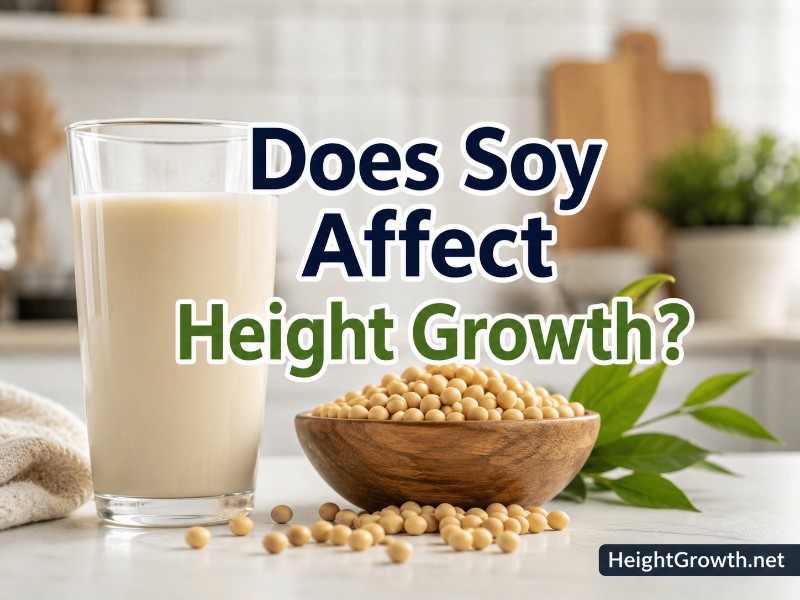
There’s a question that comes up constantly in parenting forums, nutrition groups, and pediatric offices: does soy affect height growth? It sounds simple enough, but the answer pulls in hormones, bone biology, food chemistry, and a surprisingly large pile of misinformation.
Here’s the short version — no, moderate soy consumption doesn’t stunt growth. But the longer version is actually worth understanding, because it explains why people worry in the first place and what actually drives height development in teens.
Key Takeaways
- Soy isoflavones are phytoestrogens, not human estrogen — their hormonal effect is far weaker than the body’s own estrogen
- No clinical evidence supports the idea that soy stunts height or disrupts puberty at normal dietary levels
- Soy is a complete plant protein, meaning it contains all essential amino acids needed for muscle and bone growth
- Height is primarily driven by genetics, sleep, overall nutrition, and growth hormones — not any single food
- The American Academy of Pediatrics (AAP) considers soy formula safe for infants when medically appropriate
How Height Growth Actually Works
Growth isn’t random. It’s a tightly coordinated process controlled by the endocrine system, and it hinges on a few key players.
The pituitary gland releases growth hormone (GH), which then signals the liver to produce insulin-like growth factor 1 (IGF-1). That IGF-1 is what actually drives bone elongation — specifically at the epiphyseal growth plates, the soft tissue zones at the ends of long bones like the femur and tibia. When those plates close (usually in the late teens), height stops increasing.
Puberty accelerates all of this. The hormonal surge that comes with adolescence — estrogen in girls, testosterone in boys — amplifies the growth spurt most kids experience between ages 10 and 16.
What influences this whole system? Genetics accounts for roughly 60–80% of height variation, according to research published in the NIH’s genetic databases. The remaining 20–40% comes down to nutrition, sleep quality, physical activity, and overall hormonal health.
So when someone asks whether soy can affect height, the real question is: does soy interfere with GH, IGF-1, growth plate activity, or puberty timing? And that’s where the science gets interesting.
What’s Actually in Soy
Before worrying about what soy does to the body, it helps to understand what soy actually is nutritionally.
Soybeans are one of the most nutrient-dense legumes on the planet. A single cup of cooked edamame delivers roughly 18 grams of protein, along with calcium, iron, magnesium, and fiber. Soy also contains isoflavones — specifically genistein and daidzein — which are classified as phytoestrogens.
That word “phytoestrogen” is where most of the confusion starts. Plant-based estrogen sounds alarming when you’re thinking about a teenager’s developing hormonal system. But the biology here matters a lot.
Soy and Hormones: The Phytoestrogen Question
Isoflavones bind to estrogen receptors in the body. That part is true. But their binding affinity is roughly 1,000 to 10,000 times weaker than the body’s own estradiol (natural estrogen). That’s not a minor difference — it’s an enormous one.
Think of it like a key that sort of fits a lock but can’t actually turn it. The isoflavone occupies the receptor without producing the same hormonal effect that real estrogen would.
Multiple clinical studies, including research reviewed by the NIH’s National Library of Medicine, have found no significant changes in serum estrogen or testosterone levels in children or adolescents consuming normal amounts of soy. The keyword there is “normal amounts” — roughly what you’d find in a balanced diet that includes tofu, soy milk, or edamame a few times per week.
At extreme intake levels (far beyond what most people eat), some animal studies have shown hormonal changes. But rodent metabolism processes isoflavones very differently from humans — a distinction that often gets lost when these studies circulate online.
What the Research Actually Says About Soy and Height Growth
The clinical picture here is pretty consistent.
Large-scale population data from Japan, South Korea, and China — all countries with historically high soy consumption — show normal height trajectories across generations. In fact, average heights in these populations have increased alongside rising soy intake over the past 50 years, which is the opposite of what you’d expect if soy suppressed growth.
A longitudinal study published in Pediatrics examined infants fed soy-based formula versus cow’s milk formula and found no meaningful differences in height, weight, or bone density by early adulthood.
Research supported by the USDA and NIH consistently shows that adequate protein intake — regardless of source — is one of the stronger dietary predictors of healthy bone development. Soy protein, being a complete protein, contributes positively to this.
There’s no peer-reviewed evidence from a reputable institution showing that moderate soy consumption stunts growth, delays puberty, or interferes with growth plate closure.
Soy During Childhood and Adolescence
The growth window matters. Kids and teenagers are in a phase where nutrition has outsized effects on long-term outcomes, which makes parents reasonably cautious about what they feed their children.
Soy has actually been studied in pediatric populations for decades, largely because soy formula became a common alternative for infants with cow’s milk allergies or lactose intolerance. The AAP’s position, last updated in their clinical guidance on infant nutrition, is that soy formula is safe for full-term infants when there’s a medical reason to avoid dairy-based formula.
For older children and teens, the research supports soy as a legitimate protein source in a balanced diet. Protein quality matters for muscle synthesis and bone mineralization, and soy holds up well on both fronts.
Where things get more nuanced is with very high, isolated supplementation of isoflavones — which isn’t the same as eating tofu or drinking soy milk. Concentrated isoflavone supplements in adolescents haven’t been studied thoroughly enough to make confident claims either way, so sticking to whole food sources of soy is the more practical approach.
Soy vs. Animal Protein: A Practical Comparison
This is a comparison worth making directly, because the “plant protein vs. animal protein for growth” debate shows up constantly.
| Factor | Soy Protein | Animal Protein (Dairy, Meat, Eggs) |
|---|---|---|
| Complete protein? | Yes — all essential amino acids | Yes |
| IGF-1 stimulation | Moderate | Higher (especially dairy) |
| Calcium content | Moderate (higher in fortified soy milk) | High (especially dairy) |
| Hormonal compounds | Phytoestrogens (weak effect) | Naturally occurring hormones (low levels) |
| Digestibility (PDCAAS score) | ~1.0 (comparable to casein) | ~1.0 |
| Best for growth? | Solid option in a balanced diet | Slightly stronger IGF-1 response |
Personal commentary on this table: The gap between soy and animal protein for growth is smaller than most people think. Animal protein — especially dairy — does produce a stronger IGF-1 response, which matters for bone growth. But the difference isn’t dramatic enough to say soy is “bad” for growth. It’s more accurate to say dairy has a modest edge in this specific context, while soy is still a genuinely good option. For teens who don’t consume dairy, well-planned soy intake isn’t a compromise — it’s a reasonable substitute.
The real risk to growth isn’t soy. It’s inadequate total protein, poor caloric intake, or chronic nutritional deficiency of any kind.
Debunking the Biggest Soy Myths
Some of the claims circulating online about soy are genuinely detached from the evidence. Worth addressing them directly.
“Soy feminizes boys.” This claim traces back largely to a handful of anecdotal case reports involving extremely high isoflavone supplement use — not normal dietary soy. Systematic reviews of clinical data find no feminizing effects in boys who consume soy as part of a regular diet.
“Soy lowers testosterone.” Multiple randomized controlled trials, including a 2021 meta-analysis in Reproductive Toxicology, found no statistically significant reduction in testosterone levels in men or adolescent boys consuming soy foods at normal dietary amounts.
“Soy causes early growth plate closure.” There’s no credible mechanism or clinical evidence for this. Growth plate closure is primarily regulated by sex hormones produced by the body — not by phytoestrogens consumed in food. The timeline for plate closure is driven by puberty progression, not diet.
These myths tend to survive because they’re simple, slightly scary, and play into broader anxieties about hormones in food. The evidence, when you actually look at it, doesn’t support them.
How to Actually Support Healthy Height Growth
If the goal is giving a teenager the best nutritional foundation for reaching their genetic height potential, here’s what the research points toward.
Protein intake matters more than the source. Teens generally need 0.85–1.2 grams of protein per kilogram of body weight daily, according to dietary reference intakes from the USDA. Whether that comes from chicken, eggs, dairy, soy, or legumes is less important than hitting those numbers consistently.
Calcium and vitamin D work together for bone mineralization. The NIH recommends 1,300 mg of calcium daily for teens aged 9–18, along with 600 IU of vitamin D. Fortified soy milk typically provides similar calcium levels to cow’s milk.
Sleep is underrated. Growth hormone is secreted primarily during deep sleep. Teens who consistently get 8–10 hours per night have a genuine physiological advantage during growth spurts.
Physical activity — particularly weight-bearing exercise — stimulates bone density and supports healthy musculoskeletal development.
Caloric adequacy is the baseline everything else builds on. A teenager in an energy deficit, regardless of how clean or balanced their diet looks on paper, won’t grow optimally. Total caloric intake needs to match the demands of a growing body.
Final Answer: Does Soy Affect Height Growth?
Based on the current weight of scientific evidence — clinical trials, population studies, institutional reviews from the NIH, WHO, USDA, and AAP — moderate soy consumption doesn’t stunt height growth. It doesn’t disrupt hormones meaningfully. It doesn’t close growth plates early.
Soy is a complete plant protein with a solid nutritional profile. When it’s part of a varied, balanced diet, it supports the same growth processes as other quality protein sources.
Height is mostly genetic. After that, it’s about total nutrition, sleep, hormones, and overall health — not about whether a teen drinks soy milk instead of cow’s milk.
If there are real concerns about a child’s growth trajectory, the right move is a conversation with a pediatrician or a registered dietitian — someone who can look at the full picture rather than singling out one ingredient.
Fellowship-trained surgical oncologist specializing in minimally invasive procedures and cancer treatment protocols.

Frequently Asked Questions
No credible clinical evidence supports this. Soy milk is a complete protein source and, when fortified, provides comparable calcium and vitamin D to cow's milk. Multiple studies show no difference in height outcomes between children who consume soy milk and those who don't.
Yes. Systematic reviews consistently show that normal soy food consumption doesn't alter testosterone levels or cause feminizing effects in boys. The concern traces back to extreme supplement use, not dietary soy.
There's no official upper limit for teens specifically, but most research considers 1–3 servings of whole soy foods daily to be well within a safe range. A serving might be a cup of soy milk, half a cup of tofu, or a handful of edamame.
The AAP considers soy formula safe for full-term infants when there's a medical indication — such as cow's milk protein allergy or galactosemia. It's not typically recommended as a first-choice formula without a reason.
Current evidence shows no significant effect on puberty timing from normal soy food consumption. Puberty timing is primarily determined by genetics, body composition, and the body's own hormonal signaling.
Total protein intake matters more than the specific source. Dairy, eggs, lean meats, and soy all support growth when consumed as part of a calorie-adequate, nutrient-rich diet. Dairy may have a slight edge due to its higher IGF-1 stimulating effect, but soy is a strong alternative for teens who don't consume dairy.
No. There's no evidence-based reason to avoid soy during puberty. The phytoestrogens in soy foods are too weak to interfere with the body's own hormonal puberty process in any clinically meaningful way
References
- Front Nutr. 2021 Nov 24;8:739607. doi: 10.3389/fnut.2021.739607 Different Effects of Soy and Whey on Linear Bone Growth and Growth Pattern in Young Male Sprague-Dawley RatsScholarly Article
- Nutr Rev . 2017 Jul 1;75(7):500-515. doi: 10.1093/nutrit/nux016. Health impact of childhood and adolescent soy consumptionScholarly Article
- Good Nutrition Starts EarlyWeb Page
- Dietary Guidelines for Americans, 2020-2025Web Page