- 1.Key Takeaways
- 2.Does Cycling Make You Taller? The Short Answer
- 3.What Actually Determines Your Height?
- 4.How Cycling Benefits Growing Children and Teenagers
- 5.Can Adults Grow Taller From Cycling?
- 6.Can Cycling Improve Your Posture and Make You Look Taller?
- 7.Cycling vs. Other Exercises for Height: A Comparison
- 8.Common Myths About Cycling and Height
- 9.Other Real Benefits of Cycling
- 10.Frequently Asked Questions
There’s a version of this question that makes complete sense. You see a tall, lean cyclist and think: did the sport do that? The silhouette is convincing. The posture is upright. The legs are long-looking. It’s reasonable to wonder.
The short answer is no — cycling does not make you taller. But the longer answer is actually worth reading, because the why behind the myth is more interesting than the myth itself, and what cycling genuinely does for a growing body is worth understanding.
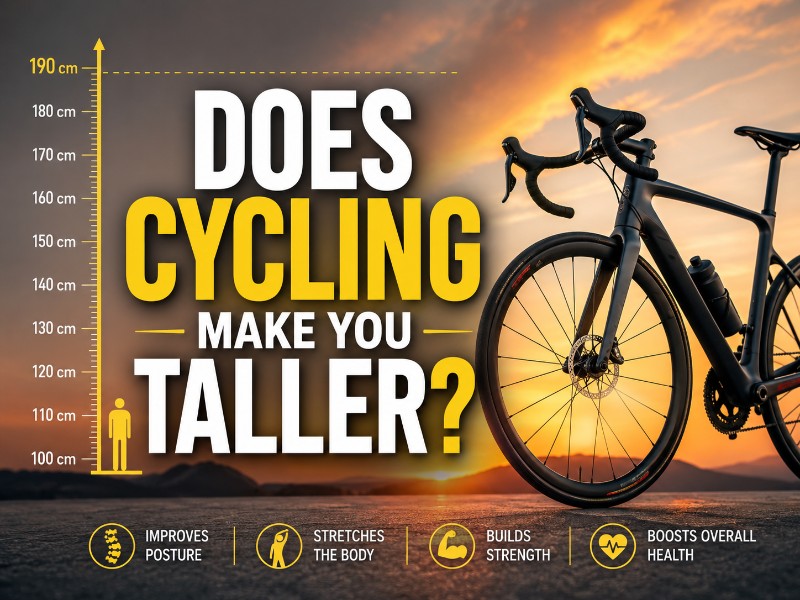
Direct answer (featured snippet): Cycling does not increase your height. No exercise can lengthen bones once growth plates have closed, and no exercise can push you past your genetic ceiling during childhood either. Cycling supports healthy development and can improve posture — making you appear taller — but it does not add inches to your frame.
Key Takeaways
- Height is ~80% determined by genetics — lifestyle factors like cycling work within that limit, not beyond it (Silventoinen, 2003)
- Cycling benefits growing kids through cardiovascular fitness, healthy weight, and bone support — none of which directly add height
- After puberty, growth plates close and height is fixed; cycling cannot reverse that
- Better posture from cycling can make you look noticeably taller — that’s real, just not the same as growing
- The “tall cyclist” observation has causality backwards: tall people tend to excel at cycling, not the other way around
Does Cycling Make You Taller? The Short Answer
Cycling does not increase your height — not for teenagers, not for adults, not for anyone.
The reason is straightforward. Height is determined by bone length, and bones grow from structures called growth plates — thin cartilage discs near the ends of long bones like the femur and tibia. During childhood and adolescence, those plates are active. They respond to hormones, nutrition, and sleep. Once puberty ends, they harden and close, and that’s the final number.
No exercise stretches bones. Cycling, running, swimming, hanging from a bar — none of it lengthens skeletal tissue. The idea that it might is appealing, but it doesn’t hold up to how bone biology actually works.
Genetics account for roughly 60–80% of final adult height, with nutrition and environment accounting for the rest (Silventoinen, 2003). Cycling isn’t in that equation as a height driver.
Why the Myth Continues
Cyclists often look taller. That’s not a coincidence — it’s a combination of things.
Regular cycling builds core muscles and back muscles, which supports a more upright posture. Lower body fat changes how the body looks proportionally. Confidence from fitness shows up in how people carry themselves. Put together, a cyclist standing next to a sedentary person of the same height genuinely appears taller — not because they grew, but because they’re not slouching.
There’s also a selection effect. Competitive road cyclists tend to be tall because height gives them aerodynamic and leverage advantages. The sport rewards tall athletes, so you see a lot of them at the top — which reinforces the association between cycling and height.
The causality runs the other direction. Cycling didn’t make them tall. Being tall helped them succeed at cycling.
What Actually Determines Your Height?
Three factors do the real work: genetics, nutrition, and sleep. Everything else — including cycling — operates at the margin.
Genetics sets the range. A 2022 study of 5.4 million participants identified over 12,000 genetic variants associated with height, explaining roughly 40% of height variation in people of European ancestry (Yengo et al., 2022, Nature). The full heritability estimate — when you factor in rarer variants and gene interactions — runs closer to 80% in developed countries (Silventoinen, 2003).
Nutrition is the most important external factor. Adequate protein, calcium, and vitamin D during childhood and adolescence allows bones to develop properly — not beyond the genetic ceiling, but up to it (Perkins et al., 2016, Nutrition Reviews). Kids who are chronically undernourished don’t reach their potential. Kids who eat well, do.
Sleep is when most of the work happens. Growth hormone is primarily released during slow-wave (deep) sleep — not in a steady drip throughout the day, but in concentrated pulses during the first few hours after falling asleep (Nocturnal Release of GH in Normal Children, Pediatric Research, 1989). For a growing teenager, disrupted or insufficient sleep isn’t just tiring — it directly limits how to grow taller.
Can Lifestyle Affect Growth During Childhood?
Yes — but in a specific way. Lifestyle doesn’t add height beyond genetics. It determines whether a child reaches their genetic potential or falls short of it.
A kid who eats poorly, sleeps five hours a night, and is chronically ill might end up inches shorter than their genes would allow. A kid who eats well, sleeps enough, and stays active is more likely to hit their ceiling. That gap matters.
This is the space where cycling — and exercise generally — actually contributes.
How Cycling Benefits Growing Children and Teenagers
Cycling won’t add inches to a teenager’s height. It might help them get closer to the height they were always going to be.
Regular aerobic exercise supports healthy body weight, and what stunts growth often comes down to things that disrupt this balance — chronic illness, poor nutrition, inadequate sleep. Cycling doesn’t directly drive bone elongation, but it supports the conditions that allow it.
There’s a bone health component too. Physical activity — especially weight-bearing exercise — is the most modifiable factor for building peak bone mass during adolescence (Reza Nouri et al., 2010, Int J Prev Med). Cycling is lower-impact than running, so it doesn’t provide as much bone-loading stimulus, but it still contributes to cardiovascular fitness and a healthy body composition that supports overall development.
Can Exercise Help You Reach Your Full Height Potential?
Exercise can help, indirectly. Here’s how the chain works: regular physical activity supports better sleep quality, healthier body weight, and hormone regulation — all of which create better conditions for growth during childhood and adolescence.
This is not the same as exercise causing height growth. It’s more accurate to say that an active lifestyle reduces the environmental drag that might otherwise pull a kid below their genetic potential.
The honest framing: cycling is good for growing kids because it’s good for their health generally. That’s real value, even if it’s less dramatic than “cycling makes you taller.”
Can Adults Grow Taller From Cycling?
Adults cannot grow taller. Growth plates close at the end of puberty — typically between ages 14–16 for girls and 16–18 for boys — and once they close, that’s it. No exercise reopens them. No supplement does either.
There is one real but temporary height variation worth knowing about. Throughout the day, the intervertebral discs in your spine compress slightly under the weight of gravity and movement. Most people are about half an inch shorter at night than they were in the morning. After sleeping horizontally, those discs rehydrate and expand. This is not growth — it’s daily variation.
Some people claim cycling decompresses the spine. There’s minimal evidence for meaningful spinal decompression from cycling specifically. What cycling can do is improve the muscle support around the spine, which leads to a more upright resting posture. That’s visible and real, but it’s posture, not height.
Can Cycling Improve Your Posture and Make You Look Taller?
This is where cycling genuinely earns something. Good posture isn’t just aesthetics — it affects how tall you appear, how you feel, and how your spine ages.
Cycling, done with proper form, builds core muscles, spinal erectors, and the muscles around the shoulder girdle. These are the muscles that hold your body upright. When they’re strong, you stand taller without effort. When they’re weak, you round forward, and you lose visible height.
The effect is real enough to notice. Someone who stands fully upright can appear one to two inches taller than their slouched self. Cycling doesn’t create that illusion — it builds the physical capacity to maintain that posture consistently.
The Importance of Proper Bike Fit
There’s a catch. Cycling with an incorrectly sized bike can work against posture rather than for it.
A saddle that’s too low causes a hunched riding position and puts strain on the lower back. Handlebars that are too far forward round the shoulders. Over time, these patterns can entrench bad posture habits rather than correct them.
Saddle height is the starting point: when your pedal is at its lowest point, your knee should have a slight bend — not fully extended, not deeply bent. If you’re using cycling for fitness and posture improvement, a bike fit from a knowledgeable shop is worth the investment.
Cycling vs. Other Exercises for Height: A Comparison
Neither cycling nor any other exercise increases height after puberty. But for growing kids, different activities do offer different indirect benefits worth comparing.
| Exercise | Weight-bearing? | Bone-loading effect | Cardiovascular benefit | Height myth status |
|---|---|---|---|---|
| Cycling | No | Low | High | Does not increase height |
| Running | Yes | High | High | Does not increase height |
| Swimming | No | Very low | High | Does not increase height |
| Basketball | Yes | Moderate-high | Moderate | Does not increase height |
| Hanging/dead hang | No | None | None | Does not increase height |
| Stretching | No | None | None | Does not increase height |
The takeaway: for bone density specifically, weight-bearing exercise like running or jumping sports provides more stimulus than cycling. For cardiovascular health, cycling is excellent. For overall development in a growing child, the best exercise is whichever one they’ll actually do consistently.
Common Myths About Cycling and Height
Myth: Cycling stretches your legs and makes them longer.
Cycling builds the muscles of the leg — quadriceps, hamstrings, glutes. It does not stretch bone. The optical effect of more defined, longer-looking legs comes from reduced body fat and improved muscle tone, not skeletal changes.
Myth: Taller cyclists grew taller because of cycling.
Tall people tend to gravitate toward and succeed in cycling, especially road cycling, because longer legs translate to more pedaling power at lower cadences. The sport selects for tall athletes. It doesn’t produce them.
Myth: Hanging from a bike or doing stretches after cycling decompresses your spine and adds height.
Does hanging increase height? The research doesn’t support meaningful lasting height gain from spinal decompression. Any temporary increase from lying down or hanging reverts quickly once you’re upright and gravity reasserts itself.
Myth: Cycling supplements boost height when combined with exercise.
No supplement has been shown to increase height beyond what genetics and normal development allow. The ingredients in most height growth gummies for kids — vitamins and minerals — are ones you can also get from a balanced diet.
Other Real Benefits of Cycling
Setting aside height entirely: cycling is genuinely good for you, and some of those benefits apply directly to growing kids.
Regular aerobic exercise supports cardiovascular health, healthy weight maintenance, and mental health. For teenagers specifically, outdoor cycling offers sunlight exposure, which matters for vitamin D synthesis — and vitamins for height growth including vitamin D play a real role in bone development during adolescence.
Cycling is also low-impact, which makes it accessible for kids and teens who might find high-impact sports painful on joints or intimidating. The barrier to entry is low. A bike, a helmet, a path — that’s the full equipment list.
For families looking at sports to boost height in the indirect sense — supporting overall healthy development — cycling fits the bill without the injury risk of contact sports.
Frequently Asked Questions
Does cycling make teenagers taller?
Cycling supports healthy development in teenagers but does not increase height beyond genetic potential. During puberty, when growth plates are still open, when do boys stop growing and when girls stop growing depends on hormones, genetics, and nutrition — not cycling.
Can cycling stretch your legs?
No. Cycling builds leg muscles and can reduce body fat, which changes the visual appearance of the legs. Bone length is fixed once growth plates close. Muscles and tendons gain flexibility with stretching, but that’s a change in range of motion, not bone structure.
Is cycling better than running for height growth?
Neither increases height after puberty. For bone development in growing children, running is actually superior to cycling because it’s weight-bearing — bones respond to impact load by increasing density (Reza Nouri et al., 2010). Cycling is better for cardiovascular fitness and joint-friendly aerobic exercise. The “best” exercise for a growing kid is the one they’ll stick with.
Does an upright cycling posture make you look taller?
Yes — genuinely. Strengthening the core and back muscles through cycling supports a more upright standing posture, which can add a visible inch or more to your apparent height. This isn’t an illusion; it’s the difference between your actual skeletal height and the height you present when slouching.
At what age do growth plates close?
Growth plates typically close between ages 13–15 for girls and 15–18 for boys, though timing varies by individual and ethnicity. After that point, no lifestyle intervention — exercise, nutrition, or supplementation — can increase height.
Should kids cycle to support healthy growth?
Yes, but for the right reasons. Cycling supports cardiovascular health, healthy body weight, and an active lifestyle — all of which help children reach their genetic height potential. It doesn’t push them past it, but for many kids, getting to their ceiling is the actual goal.
Cardiologist and researcher with over a decade of clinical experience in heart disease prevention and cardiovascular risk reduction.
Board-certified endocrinologist with 14 years of experience specializing in diabetes management and metabolic disorders.