- 1.Where the Myth Actually Came From
- 2.How Height Actually Gets Determined
- 3.What Actually Happens to Your Body During a Deadlift
- 4.What the Research Actually Shows
- 5.Growth Plates and Real Injury Risk
- 6.Safe Deadlifting for Teens and Young Athletes
- 7.Benefits That Go Beyond Getting Stronger
- 8.Common Misconceptions Worth Clearing Up
- 9.The Bottom Line
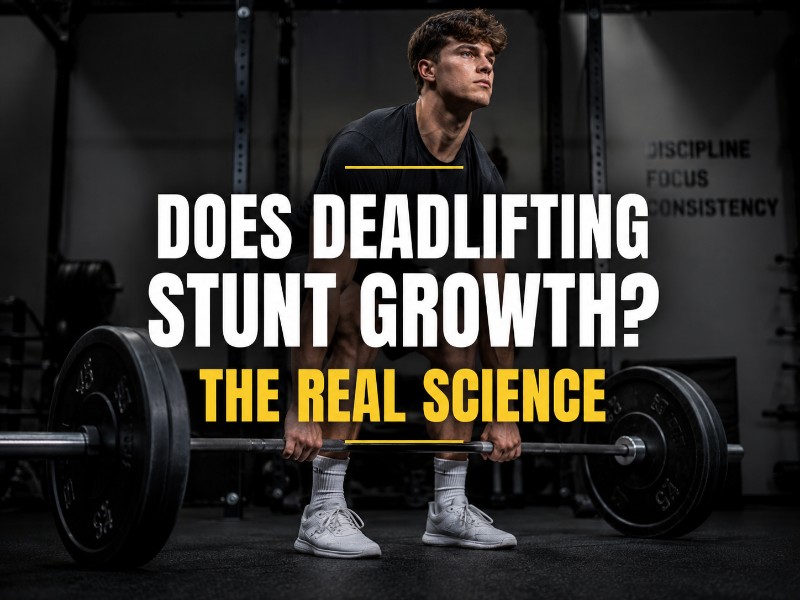
If you’ve ever stepped into a gym as a teenager — or watched your kid pick up a barbell for the first time — chances are someone nearby muttered something about stunted growth. It’s one of those gym-floor warnings that refuses to die, passed down from parent to coach to worried friend, despite decades of sports medicine research pointing in the opposite direction.
The truth is less dramatic than the myth. Deadlifts don’t make you shorter. But the reasons why people believe they do are worth unpacking, because understanding the actual science helps you train smarter, worry less, and make better decisions for yourself or your young athlete.
Where the Myth Actually Came From
The fear of lifting weights during adolescence didn’t appear out of nowhere. Back in the 1970s and 80s, pediatric sports medicine was still in its early stages, and the prevailing medical caution was simple: growing bones seem fragile, so maybe avoid loading them. Orthopedic textbooks at the time flagged growth plate injuries as a real concern, and that legitimate caution got distorted — somewhere along the way — into “weightlifting stops growth.”
The misunderstanding comes partly from conflating two very different things: injury risk and growth inhibition. A growth plate injury from improper lifting is a real (though rare) concern. But that’s not the same as saying resistance training itself shortens your skeleton. One is about poor technique or excessive load; the other is about the exercise category itself. Those aren’t the same thing, and treating them as identical has caused a lot of unnecessary anxiety.
Gym culture didn’t help either. Plenty of short, jacked lifters became cautionary tales — even though their height had everything to do with genetics and nothing to do with the squat rack.
How Height Actually Gets Determined
Height is mostly settled before you ever touch a barbell. Genetics accounts for roughly 60–80% of your adult stature, and the rest is filled in by nutrition, sleep, hormonal balance, and overall health during childhood and adolescence.
Here’s roughly how it works. Your bones grow from regions called epiphyseal plates — or growth plates — located near the ends of long bones like the femur and tibia. During puberty, human growth hormone (HGH) and IGF-1 (insulin-like growth factor 1) stimulate these plates to produce new bone tissue. That process eventually slows, the plates harden (or “close”), and you reach your adult height — typically in the late teens for girls and early twenties for boys.
What disrupts this process? Severe malnutrition. Chronic illness. Hormonal disorders. Significant sleep deprivation during key developmental windows. Not deadlifts.
Protein intake, calcium, and vitamin D during adolescence genuinely matter for skeletal development. If anything, resistance training tends to support bone health by increasing bone mineral density — the opposite of what the myth suggests.
What Actually Happens to Your Body During a Deadlift
A deadlift is fundamentally a hip hinge movement. You’re loading the posterior chain — glutes, hamstrings, erector spinae, core — while maintaining a neutral spine through a controlled range of motion. Done correctly, it’s one of the most mechanically efficient exercises a human can perform.
Yes, the spine experiences compressive load during a deadlift. That’s true. But compression is not the same as damage. Spinal discs are designed to handle compressive forces; that’s part of their biological function. After a lifting session, some temporary height reduction (usually 1–2 centimeters from disc compression) can be measured — but this reverses completely during rest and sleep, when the discs rehydrate and decompress. Every person who’s spent a long day on their feet experiences something similar.
The muscles recruited during a deadlift — glutes, hamstrings, lats, core — are precisely the muscles that support spinal alignment in daily life. Building them up doesn’t damage posture; it reinforces it.
What causes injury isn’t the exercise itself. It’s rounding the lower back under heavy load, hyperextending at the lockout, or lifting weights that exceed the lifter’s current capacity and technique level. That’s a coaching problem, not a deadlift problem.
What the Research Actually Shows
The scientific consensus on youth resistance training has been fairly clear for at least two decades. Organizations including the American Academy of Pediatrics, the National Strength and Conditioning Association (NSCA), and the British Journal of Sports Medicine have all published position statements affirming that properly supervised strength training is safe and beneficial for children and adolescents.
A 2017 review published in the British Journal of Sports Medicine examined injury rates across youth sport and found that resistance training had lower injury rates per training hour than many popular youth sports including soccer and basketball. The research doesn’t show a link between properly performed strength training and reduced adult height.
What the research does show is that growth plate fractures — while possible — typically occur from acute trauma (a fall, a collision) or from severely inappropriate loading, not from age-appropriate progressive resistance training.
The comparison below shows how different factors stack up against each other in terms of real influence on height:
| Factor | Influence on Adult Height | Evidence Strength |
|---|---|---|
| Genetics | Very High (60–80%) | Extremely strong |
| Nutrition (protein, calcium, vitamin D) | Moderate | Strong |
| Sleep quality | Moderate | Strong |
| Hormonal health (HGH, IGF-1) | Moderate–High | Strong |
| Resistance training (proper technique) | Negligible to none | Strong |
| Growth plate injury from overloading | Potential disruption | Moderate (context-dependent) |
Honestly, looking at this table, resistance training barely registers. It’s not a meaningful variable in the height equation for the vast majority of young lifters. The factors that actually move the needle — genetics, sleep, nutrition — are the ones worth focusing on.
Growth Plates and Real Injury Risk
Growth plates deserve a more careful look, because this is where the myth has its only legitimate kernel of truth.
The epiphyseal plates are the most vulnerable part of a developing skeleton. They’re softer than mature bone, and a significant impact or extreme compressive force can damage them. In theory. But in practice, growth plate injuries from strength training are uncommon and almost always linked to poor form, excessive loads relative to the athlete’s development, or complete absence of coaching supervision.
The injuries that do make orthopedic case studies tend to involve kids attempting maximal lifts without instruction — often using equipment that doesn’t fit them, with no one watching. That’s a very different scenario from a teenager following a properly designed progressive program under a certified strength coach.
Routine strength training with appropriate loads doesn’t expose the epiphyseal plates to forces beyond what they’re designed to handle. In fact, moderate mechanical stress on bones stimulates bone formation — it’s the same principle behind why weight-bearing exercise is recommended for preventing osteoporosis later in life.
Safe Deadlifting for Teens and Young Athletes
The key word in youth strength training is supervised. A teenager with solid coaching, appropriate programming, and gradual progression is at no meaningful risk of growth-related harm from deadlifting.
In practice, this looks like:
- Starting with technique, not weight. Learning the hip hinge pattern with a light barbell or even a PVC pipe before adding load. The pattern has to be there first.
- Progressive overload, not ego lifting. Loads increase gradually — weekly or monthly — not because someone wants to impress their friends.
- Proper warm-up and mobility work. Hamstring and hip mobility directly affect how well the hip hinge functions and how much spinal stress occurs during the lift.
- Adequate recovery between sessions. Young athletes are still developing, and recovery matters just as much as the training itself.
- Access to a qualified coach. A certified strength and conditioning specialist (CSCS) or experienced coach can catch form breakdowns before they become injury risks.
These aren’t complicated requirements. They’re just good training principles — for any age.
Benefits That Go Beyond Getting Stronger
Deadlifts, done right, offer a genuinely impressive list of benefits that have nothing to do with how much weight is on the bar.
Bone mineral density increases with resistance training, which matters enormously for long-term skeletal health. Athletes who build this foundation in their teens and twenties carry it into middle age and beyond, significantly reducing fracture risk later in life.
Posture improves because the posterior chain — the muscles running up the back of the body — is strengthened and better able to support upright alignment. Ironically, deadlifts are often recommended for people with poor posture, not avoided because of it.
Athletic performance gets a genuine boost. The hip hinge pattern transfers directly to sprinting, jumping, throwing, and most sport-specific movements. Young athletes who deadlift tend to run faster and absorb impact better.
And there’s the confidence dimension, which isn’t trivial. Learning to execute a technically demanding lift, progressing steadily, and seeing measurable strength gains has a real effect on how teenagers relate to their bodies and their physical capabilities.
For those looking to support healthy growth during adolescence alongside a training program, some families incorporate nutritional supplements designed specifically for this period — products like NuBest Tall, which are formulated to support bone health, calcium absorption, and the nutritional foundations that actually influence height during development. These work alongside — not instead of — good sleep, balanced diet, and consistent exercise habits.
Common Misconceptions Worth Clearing Up
A few myths that still circulate and deserve a direct response:
“Heavy weights compress the spine permanently.” They don’t. Temporary disc compression from lifting reverses completely with rest. This is normal physiology, not damage.
“Teens should avoid weight training entirely.” Major sports medicine organizations disagree. Age-appropriate resistance training is considered safe and beneficial for adolescents.
“Cardio is safer than strength training for young people.” Injury data doesn’t support this. Youth soccer and basketball have higher injury rates per training hour than supervised strength programs.
“Machines are always safer than free weights.” Machines restrict movement to fixed planes, which can actually create more stress on joints that aren’t aligned perfectly with the machine’s path. Free weight technique, taught properly, often produces more balanced muscle development and better proprioception.
“Deadlifts ruin posture.” This one gets it backwards. A strong posterior chain is what supports good posture. The problem is poor technique, not the exercise itself.
The Bottom Line
Deadlifts don’t stunt growth. The research is consistent, the sports medicine consensus is clear, and the mechanism by which deadlifts would permanently reduce height simply doesn’t hold up to scrutiny.
What actually determines your adult height is mostly written in your DNA, shaped by how well you sleep, what you eat, and how your hormones develop during puberty. Resistance training plays no meaningful negative role in that process — and when done correctly, it actively supports bone density, posture, and athletic development.
The caution worth keeping is around technique and supervision. Not because deadlifts are uniquely dangerous, but because any complex movement performed badly carries risk. Good coaching solves that problem almost entirely.
If you’re a teenager wanting to deadlift, or a parent trying to decide whether to allow it — the honest answer, backed by the science, is that a properly supervised strength program is one of the better decisions a young athlete can make. The growth myth is just that: a myth. And it’s one that’s kept too many people out of the weight room for too long.
Cardiologist and researcher with over a decade of clinical experience in heart disease prevention and cardiovascular risk reduction.
Board-certified endocrinologist with 14 years of experience specializing in diabetes management and metabolic disorders.