- 1.Key Takeaways
- 2.Height Growth Diet for Boys vs Girls: Why Growth Patterns Are Different
- 3.Essential Nutrients That Support Healthy Height Growth
- 4.Height Growth Diet Recommendations for Boys
- 5.Height Growth Diet Recommendations for Girls
- 6.Foods That Naturally Support Healthy Growth
- 7.Lifestyle Habits That Work Together With a Height Growth Diet for Boys vs Girls
- 8.Common Nutrition Mistakes That May Affect Healthy Growth
- 9.Sample One-Day Height Growth Diet for Boys vs Girls
- 10.Final Thoughts
Most parents know that food matters for growth. Fewer realize the specifics change depending on whether their child is a boy or a girl — not just in quantity, but in which nutrients matter most and when.
The short version: girls enter their growth spurt earlier and need a calcium-and-iron focus during adolescence; boys grow later, grow longer, and need more total calories and protein during that window. Both need the same foundation of nutrients, but the timing and the priorities shift.
Key Takeaways
- Genetics determine roughly 80% of adult height (Silventoinen, 2003). Diet helps kids hit the ceiling of their genetic range — it doesn’t override it.
- Girls typically begin their pubertal growth spurt between ages 8–13; boys start 2–3 years later but usually grow for longer.
- After menstruation starts, girls need significantly more iron — an often overlooked shift.
- Boys have higher total calorie and protein needs during peak adolescent growth.
- Sleep and physical activity work alongside diet — nutrition alone doesn’t close the gap.
Height Growth Diet for Boys vs Girls: Why Growth Patterns Are Different
Girls and boys don’t just grow at different rates. They grow on entirely different schedules.
Girls typically hit peak height velocity — the fastest stretch of their growth spurt — around age 11 or 12. By the time most boys are just entering puberty, many girls are already past their most intense growth phase. Boys reach peak height velocity closer to ages 13–14 and often continue growing into their late teens.
This matters for diet planning because the nutritional window is different. Pile on calcium-dense foods for your 10-year-old daughter now. For your 12-year-old son, that window is still opening.
The hormonal differences compound this. Estrogen accelerates bone maturation in girls, which is why their growth plates close earlier — typically around 14–16. Testosterone in boys drives a longer, more gradual growth period before plates close, usually between 16–18. (when boys stop growing)
Same nutrients. Different urgency. Different timing.
Essential Nutrients That Support Healthy Height Growth
Before splitting by gender, there’s a shared foundation — nutrients that every growing child needs regardless of sex. Get these right, and you’re covering most of the work.
Protein for Muscle and Bone Development
Protein isn’t just for muscles. It’s a core component of bone matrix — the structural scaffold that mineralization builds on. Protein and height growth are directly linked during the years when kids are laying down bone fast.
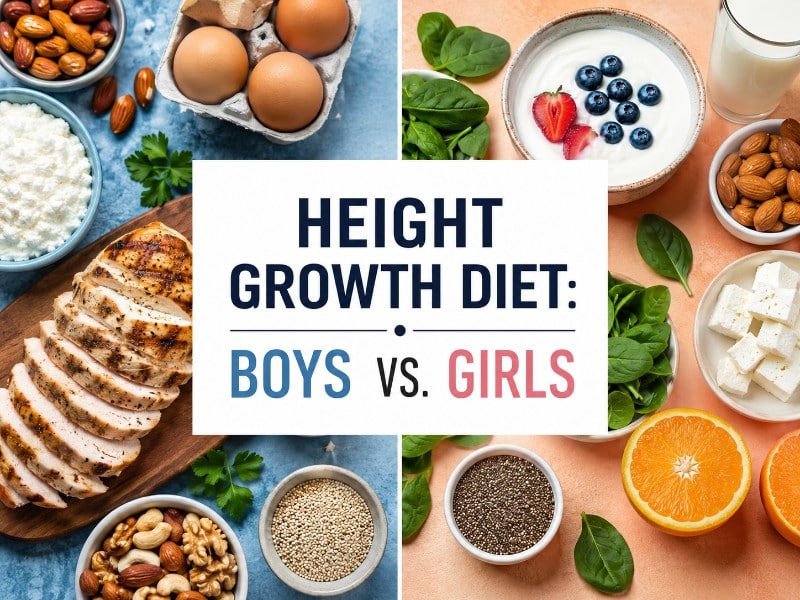
Good sources for American families: chicken breast, eggs, Greek yogurt, canned salmon, beans, and cottage cheese. These provide complete or near-complete amino acid profiles without the dietary gymnastics of combining plant proteins.
Dairy specifically has a track record here. A prospective cohort study following 5,101 girls across the US found that those drinking more than 3 servings of dairy per day showed greater height growth (Wiley, 2005). That’s not a supplement claim — that’s food.
Calcium and Vitamin D for Strong Bones
Calcium and vitamins for height growth are the most well-established nutritional factors for bone development. Calcium is the raw material; vitamin D controls how much of it actually gets absorbed.
Without adequate vitamin D, calcium passes through largely unused. Kids who live in northern states, spend most of the day indoors, or have darker skin tones are at higher risk of deficiency — and the dietary sources alone often fall short. Fortified milk is the most reliable everyday fix.
Aim for 1,000–1,300 mg of calcium daily for children aged 9–18, per standard pediatric guidelines. Milk, cheese, fortified orange juice, and yogurt are the easiest routes.
Zinc, Magnesium, and Iron
These three tend to get overlooked because they don’t have the same PR as calcium. But zinc supports cellular growth and immune function during puberty; magnesium plays a role in bone mineralization; iron carries oxygen to growing tissues.
Foods that help you grow taller consistently include zinc-rich options like lean beef, pumpkin seeds, and lentils. Spinach and fortified cereals cover magnesium and iron with one grocery run.
Height Growth Diet Recommendations for Boys
Boys entering puberty — roughly ages 11–16 — have some of the highest calorie needs of any group in the human lifespan. We’re talking 2,200–3,200 calories per day for active teen boys, depending on size and activity level.
The practical implication: undereating during this window isn’t just bad for performance. It’s bad for growth. The body will prioritize energy needs over bone elongation when calories are short.
Protein is the priority. During peak growth velocity, boys need around 0.85 grams of protein per pound of body weight — sometimes more if they’re doing resistance training or playing competitive sports. Eggs, peanut butter, whole milk, lean beef, and Greek yogurt are workhorses here. Aim for protein at every meal, not just dinner.
Hydration also matters more than most parents expect. Dehydrated tissue doesn’t grow as efficiently, and teen boys are chronically under-hydrated — water, not sports drinks, should be the default.
For boys doing resistance exercise alongside their growth (which is fine — does weight training stunt growth has a clear answer: no), recovery nutrition within 30–60 minutes post-workout accelerates both muscle and bone adaptation.
Height Growth Diet Recommendations for Girls
Girls need everything boys need, with two critical additions: more calcium earlier, and more iron after menstruation begins.
The calcium window for girls is front-loaded. Because growth plates close earlier, the years between 9–14 are when dietary calcium has the most leverage. Missing those years doesn’t just affect height potential — it affects peak bone mass for life. This is one reason pediatricians push dairy so hard for pre-teen girls specifically.
Iron becomes the second priority after menstruation starts. Monthly blood loss increases iron requirements substantially — adolescent girls need around 15 mg of iron per day, compared to 11 mg for boys the same age. The gap is real, and it shows up as fatigue and poor concentration when it’s not met.
Iron from animal sources (beef, turkey, salmon) absorbs more efficiently than plant iron. For families eating mostly plant-based, pairing iron-rich foods with vitamin C — an orange alongside lentils, for example — meaningfully improves absorption.
Tofu, leafy greens, and fortified cereals can cover this for vegetarian families. It just takes more intentional planning.
Foods That Naturally Support Healthy Growth
High-Quality Protein Foods
The most reliable protein sources for growing kids are also among the most available at standard US grocery stores:
- Chicken breast and turkey — lean, high-protein, affordable
- Salmon — adds omega-3s alongside protein, which support bone and brain development
- Eggs — complete amino acid profile, easy to prepare in volume
- Cottage cheese — underrated; high in casein protein, which digests slowly overnight
- Greek yogurt — doubles as a calcium source; useful at breakfast or as a snack
Fruits and Vegetables Rich in Growth Nutrients
Most kids don’t need exotic produce. They need more of the basics, consistently.
- Oranges and bell peppers for vitamin C, which aids iron absorption and collagen formation in bone
- Sweet potatoes for vitamin A, which supports cell growth and immune function
- Broccoli for calcium plus vitamin C — one of the rare non-dairy calcium sources worth actually eating
- Blueberries for antioxidants that reduce inflammation during periods of rapid tissue growth
Whole Grains and Healthy Fats
Growth is energy-intensive. Whole grains — oatmeal, brown rice, whole-grain bread — provide sustained energy without the blood sugar crash that follows processed carbs.
Healthy fats from avocados, almonds, and salmon support hormone production, including the hormones that regulate growth. These aren’t optional. Fat-restricted diets in adolescents have been linked to hormonal disruption, which is the last thing a growing body needs.
Lifestyle Habits That Work Together With a Height Growth Diet for Boys vs Girls
| Factor | Why It Matters | Practical Target |
|---|---|---|
| Sleep | Growth hormone is released primarily during deep sleep (Shaw et al., 2023) | 8–10 hours for teens; 9–11 for younger children |
| Exercise | Weight-bearing activity increases bone mineral density (Front Pediatr., 2025) | 60 min/day of moderate-to-vigorous activity |
| Sunlight | Natural vitamin D synthesis; hard to get from diet alone | 15–30 min of midday sun exposure daily |
| Limiting sugary drinks | Does sugar stunt growth — displaces nutrient-dense foods and disrupts insulin | Water and milk as defaults; soda as an occasional thing |
Sleep deserves special emphasis. The body’s growth hormone pulses happen mostly in the first few hours of deep sleep — not as a slow drip throughout the day. A teen getting 6 hours of fragmented sleep is functionally cutting off a significant portion of that hormonal output. No diet compensates for that.
Common Nutrition Mistakes That May Affect Healthy Growth
Skipping breakfast is probably the most common. After 8–10 hours of fasting overnight, the body needs fuel to resume growth processes. A protein-and-calcium breakfast — eggs, yogurt, oatmeal with milk — sets the hormonal tone for the morning.
Ultra-processed foods and excess sugary drinks don’t just add empty calories. Research in US children found that soft drink consumption and high-fat diets were associated with lower height-for-age scores (Kim & Keen, 2021). The mechanism is partly displacement — kids drinking two sodas a day are drinking two sodas instead of something else.
Supplement overuse is the other trap. Height growth gummies and growth supplements can fill specific nutrient gaps, but they don’t replace a varied diet, and many contain nutrient levels too low to matter or in forms with poor absorption. The list of nutrients in a typical supplement is, as the evidence consistently shows, also just the list of nutrients in a well-balanced diet.
Restrictive dieting in adolescents — especially in girls — is the highest-risk mistake. Calorie restriction during peak growth years reduces both height potential and bone density at an age when both are being set for life.
Sample One-Day Height Growth Diet for Boys vs Girls
For a growing girl (ages 10–14):
- Breakfast: Greek yogurt with blueberries + Quaker Oats oatmeal + glass of milk
- Lunch: Turkey and cheese sandwich on whole-grain bread + apple + baby carrots
- Snack: Peanut butter on whole-grain crackers + orange (vitamin C helps with iron absorption)
- Dinner: Grilled salmon + brown rice + steamed broccoli
- Dessert: Cottage cheese with a drizzle of honey
For a growing boy (ages 13–17):
- Breakfast: 3 scrambled eggs + Quaker Oats oatmeal + glass of whole milk
- Lunch: Double-protein turkey sandwich on whole-grain bread + apple + baby carrots + milk
- Snack: Banana with peanut butter (fast fuel + protein before or after activity)
- Dinner: Grilled chicken breast + brown rice + broccoli + side salad with olive oil
- Dessert: Greek yogurt
The boy’s version isn’t just bigger. It front-loads protein across every meal and uses higher-calorie options like whole milk and eggs in larger quantities. The girl’s version keeps calcium and vitamin C pairings intentional — the orange at snack time isn’t decoration.
Final Thoughts
Diet doesn’t override genetics. That 80% figure from Silventoinen (2003) is worth sitting with — it means the dietary ceiling on height is real, and parents shouldn’t chase supplements chasing a half-inch that was never in the cards.
What nutrition does is help a child reach the top of their genetic range instead of the bottom. That gap — between optimal and suboptimal childhood nutrition — can represent several inches of height and decades of bone health.
The differences between boys and girls aren’t complicated once you know the timing. Girls need calcium now, and iron soon. Boys need volume, especially protein and total calories, during the later but longer growth push.
Everything else — sleep, exercise, limiting junk food — works with the diet, not instead of it.
Pediatrician and public health specialist with expertise in child development, vaccination programs, and community health initiatives.
Fellowship-trained surgical oncologist specializing in minimally invasive procedures and cancer treatment protocols.

Frequently Asked Questions
Not exactly. Boys generally grow taller because of hormonal and skeletal differences, longer growth periods, and genetics. Higher calorie intake supports those processes but doesn’t cause them independently.
Severe or long-term nutritional deficiencies during childhood may interfere with reaching full genetic height potential. Mild dietary imperfections usually don’t create major effects.
Both sexes need calcium. Girls often complete bone development earlier, so maintaining adequate calcium intake during early adolescence becomes especially important.
Sports don’t directly lengthen bones beyond genetic potential. However, physical activity supports bone strength, hormone balance, muscle development, and healthy body composition.
Most over-the-counter height supplements lack strong clinical evidence. Balanced nutrition, sleep, physical activity, and medical monitoring remain far more important.
References
- Centers for Disease Control and Prevention (CDC) Growth ChartsScholarly Article
- National Institutes of Health (NIH) – Vitamin D Fact SheetScholarly Article
- United States Department of Agriculture (USDA) Dietary GuidelinesScholarly Article
- Academy of Nutrition and Dietetics – Protein and Adolescent NutritionScholarly Article
- National Institutes of Health Office of Dietary Supplements – Iron RecommendationsScholarly Article
- American Academy of Pediatrics – Teen Sleep RecommendationsWeb Page