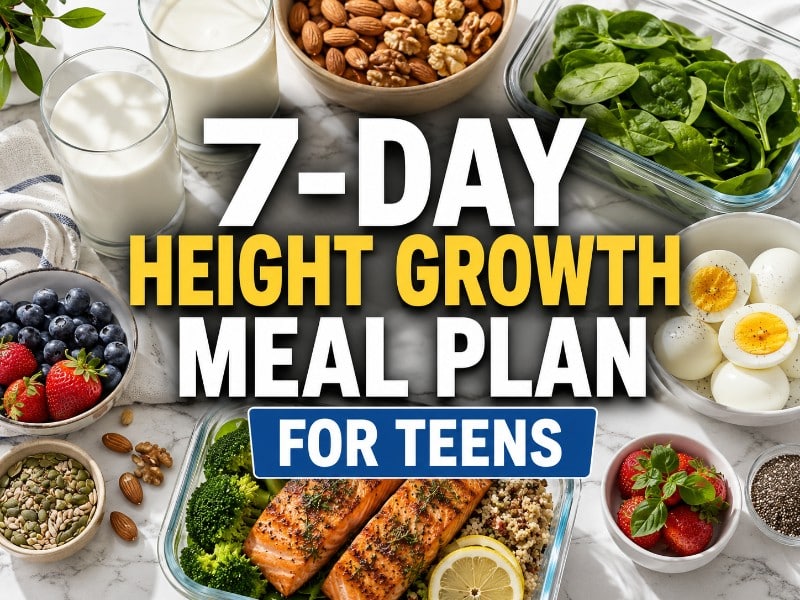
There’s a lot of noise out there about “height growth hacks” — supplements, stretching routines, miracle foods. Most of it doesn’t hold up. What actually holds up, consistently, is solid nutrition during the years your teen’s body is actively building itself. That window is real, and it matters more than most people realize.
Genetics determines roughly 60–80% of your teen’s final height. That part’s fixed. But the other 20–40% — that’s where food, sleep, and lifestyle do their work. And here’s what tends to get overlooked: you can’t grow what you can’t build. Without the right raw materials, even the best genetic blueprint goes partially unrealized.
This 7-day meal plan is built around that reality. Every day is structured to deliver the nutrients that support bone development, hormone production, and muscle growth during adolescence. It’s designed for real American families — nothing exotic, nothing complicated.
Key Takeaways
- Protein, calcium, vitamin D, and zinc are the four nutrients most directly tied to teen growth and bone development.
- Skipping breakfast consistently reduces total daily nutrient intake in ways that compound over time.
- Growth hormone production peaks during deep sleep — sleep quality isn’t optional.
- Most healthy teens don’t need supplements if they’re eating a varied, whole-food diet.
- Exercise, particularly weight-bearing activities, actively supports bone density during puberty.
Why Nutrition Matters During These Specific Years
Puberty triggers a surge in growth hormone and sex hormones — estrogen and testosterone — that accelerates bone growth, muscle development, and overall body composition changes. This is when growth plates (the soft cartilage zones near the ends of bones) are most active. Once those plates close, usually in the late teens, linear height growth stops.
That’s the window. And it’s shorter than most people expect.
During this period, the body’s demand for certain nutrients spikes significantly. Calcium needs jump to around 1,300 mg per day during adolescence — higher than at almost any other life stage. Protein needs increase too, ranging roughly from 46–52 grams per day for teen girls and 52–59 grams for teen boys, though active teens often need more.
The point isn’t to obsess over numbers. It’s to understand that this isn’t the time for chronic nutrient gaps.
The Nutrients That Do the Heavy Lifting
Some nutrients matter more than others during growth years. Here’s a quick breakdown of what they actually do:
| Nutrient | Primary Role | Top Food Sources |
|---|---|---|
| Calcium | Bone mineralization and density | Dairy, fortified plant milks, leafy greens |
| Vitamin D | Enables calcium absorption | Fatty fish, fortified milk, sunlight |
| Protein | Tissue building, hormone production | Chicken, eggs, beef, beans, Greek yogurt |
| Zinc | Cell division, growth plate activity | Beef, pumpkin seeds, legumes |
| Magnesium | Bone mineralization, muscle function | Nuts, seeds, whole grains, leafy greens |
| Phosphorus | Skeletal structure and strength | Dairy, meat, fish, eggs |
| Vitamin K | Bone protein regulation | Spinach, broccoli, kale |
| Omega-3s | Hormone synthesis, inflammation control | Salmon, tuna, walnuts, flaxseed |
This table isn’t just a list — the differences between these nutrients matter. Calcium and vitamin D, for example, are functionally codependent. You can eat all the dairy you want, but without adequate vitamin D, calcium absorption drops dramatically. That’s why fortified milk is more effective than non-fortified sources: it delivers both in one package. Similarly, zinc and protein work together in protein synthesis — a deficiency in either slows tissue repair and growth.
The 7-Day Height Growth Meal Plan
Day 1: High-Protein Foundation
Breakfast: Greek yogurt parfait layered with mixed berries and granola, plus a glass of fortified milk.
Lunch: Grilled chicken sandwich on whole-grain bread with baby carrots and apple slices.
Dinner: Baked salmon with brown rice and steamed broccoli.
Snacks: String cheese and a small handful of mixed nuts.
Why this day works: salmon delivers both high-quality protein and omega-3 fatty acids, which support hormone synthesis. Greek yogurt contributes calcium and probiotics. The combination of protein sources across the day supports continuous amino acid availability — which is how tissue building actually happens, not in one big hit.
Day 2: Bone-Building Nutrition
Breakfast: Oatmeal made with milk, topped with banana and a spoonful of peanut butter.
Lunch: Turkey and cheese wrap with cucumber slices and an orange.
Dinner: Lean beef stir-fry with bell peppers served over quinoa.
Snacks: Cottage cheese with fresh strawberries.
Quinoa stands out here because it’s one of the few plant foods that contains all essential amino acids. Paired with lean beef — which is dense in zinc and phosphorus — this day is particularly strong for skeletal support. The cottage cheese at snack time adds a quiet but meaningful calcium boost before the overnight fast.
Day 3: Calcium and Vitamin D Focus
Breakfast: Scrambled eggs with whole-wheat toast and a glass of fortified orange juice.
Lunch: Tuna salad sandwich with a side salad.
Dinner: Grilled chicken breast with sweet potato and green beans.
Snacks: Yogurt and almonds.
Eggs plus fortified OJ plus yogurt — this day stacks calcium and vitamin D more intentionally than most meal plans do. Tuna at lunch adds another source of vitamin D that tends to get forgotten. Sweet potato contributes potassium and vitamin A, both relevant to overall cellular health during growth.
Day 4: Muscle and Bone Growth Support
Breakfast: Protein smoothie blended with milk, banana, and a handful of spinach.
Lunch: Burrito bowl with grilled chicken, black beans, and brown rice.
Dinner: Turkey meatballs with whole-grain pasta and roasted vegetables.
Snacks: Hard-boiled eggs and trail mix.
Black beans deserve more credit than they usually get. They’re dense in iron, magnesium, and zinc — all relevant to growth plate activity and protein synthesis. Combined with chicken in the same meal, iron absorption actually improves (heme iron from meat enhances non-heme iron absorption from plants). That’s not a coincidence; it’s smart meal design.
Day 5: Nutrient-Dense Whole Foods
Breakfast: Whole-grain pancakes with fresh blueberries and milk.
Lunch: Chicken Caesar wrap with an apple.
Dinner: Baked cod with roasted potatoes and asparagus.
Snacks: Greek yogurt and pumpkin seeds.
Pumpkin seeds are one of the most underrated snack foods for teen nutrition. A one-ounce serving delivers roughly 2.2 mg of zinc — that’s about 20–30% of a teen’s daily requirement in a handful. They’re also rich in magnesium. Cod is a leaner white fish that still delivers solid protein and selenium, which supports thyroid function and, indirectly, growth hormone metabolism.
Day 6: Active Teen Performance Day
Breakfast: Egg and cheese breakfast burrito with fresh fruit.
Lunch: Turkey burger with sweet potato fries and a side salad.
Dinner: Shrimp stir-fry over brown rice with mixed vegetables.
Snacks: Protein-rich smoothie and cheese cubes.
For teens who play sports or train regularly, this day is particularly useful. Shrimp is one of the leanest protein sources available — high protein, low fat, and a solid source of vitamin B12, which supports neurological development and red blood cell production. Vitamin B12 deficiency is more common in teens than most people expect, especially in those reducing meat intake.
Day 7: Balanced Growth and Recovery
Breakfast: Whole-grain cereal with milk and mixed berries.
Lunch: Grilled chicken salad with whole-grain crackers.
Dinner: Lean beef tacos with avocado and black beans.
Snacks: Cottage cheese and banana.
Avocado brings healthy monounsaturated fats into the picture — something easy to overlook when focusing on protein and calcium. Hormones, including growth hormone, are synthesized from fat. Chronic low-fat diets in teens can quietly interfere with hormone production in ways that don’t show up immediately. The banana-cottage cheese combo at snack is a quiet favorite for nighttime recovery: fast carbs to replenish glycogen, slow-digesting casein protein to sustain amino acid release through the overnight fast.
Foods That Consistently Support Growth
Across all seven days, these foods appear most frequently — and for good reason:
- Greek yogurt (Chobani, Oikos)
- Fortified milk (Fairlife, Horizon Organic)
- Eggs
- Salmon
- Chicken breast
- Lean beef
- Tuna
- Black beans and lentils
- Spinach and broccoli
- Sweet potatoes
- Almonds and pumpkin seeds
These aren’t trendy superfoods. They’re foods that reliably deliver the nutrients that matter most during adolescence — and they’re all accessible at any US grocery store without breaking the budget.
Habits That Undermine Growth Potential
Nutrition is only part of the picture. Several common teen habits work against what good food is trying to do.
Skipping breakfast is probably the most impactful negative habit. It doesn’t just reduce morning energy — it compresses total daily nutrient intake into fewer hours, which makes hitting calcium and protein targets genuinely harder.
Excess sugary beverages — soda, flavored sports drinks, energy drinks — don’t just add empty calories. They displace nutrient-dense foods and, in the case of phosphoric acid in sodas, may actually interfere with calcium absorption over time.
Inadequate sleep is where a lot of growth potential quietly leaks away. Growth hormone is secreted in pulses during deep sleep, with the largest pulse occurring in the first few hours after falling asleep. Teens who consistently get six hours instead of nine aren’t just tired — they’re producing less growth hormone. That’s a real physiological cost.
Sedentary lifestyle matters too. Weight-bearing exercise — running, basketball, resistance training — applies mechanical stress to bones, which signals the body to increase bone mineral density. It’s one of the few external factors that consistently improves bone health beyond what nutrition alone can do.
Frequently Asked Questions
Can nutrition actually make a teen taller?
Not beyond their genetic potential. But most teens don’t reach that potential — chronic nutrient gaps, poor sleep, and sedentary habits shave inches off what their genes would otherwise allow. Good nutrition helps close that gap.
Which foods help the most with height growth?
Foods high in protein, calcium, vitamin D, and zinc are the most directly relevant. In practice, that means dairy, eggs, fatty fish, lean meats, legumes, and leafy greens. The combination matters more than any single food.
How much protein does a teen actually need?
Roughly 46–59 grams per day is the standard range, but active teens — those playing sports or training regularly — often need closer to 70–90 grams. Spreading protein intake across three meals tends to be more effective than concentrating it in one.
Are supplements necessary?
For most healthy teens eating a varied diet, no. A daily vitamin D supplement (600–1,000 IU) is sometimes worth discussing with a pediatrician, particularly for teens who spend limited time outdoors or avoid dairy. But supplements don’t replace food — they fill specific gaps.
Does exercise help teens grow taller?
It supports the conditions for growth — stronger bones, better posture, healthier hormones — but it doesn’t override genetics. The most relevant exercises are weight-bearing activities: running, jumping sports, resistance training.
When does teen height growth typically stop?
Growth plates usually close between ages 14–16 in girls and 16–18 in boys, though this varies. Once growth plates close, linear height growth ends. That’s why the teenage years are the highest-leverage window for nutrition-focused growth support.
Final Thoughts
Helping a teen reach their growth potential isn’t about any single superfood or rigid protocol. It’s about consistent, repeated exposure to the nutrients their body is actively looking for during these years — protein, calcium, vitamin D, zinc, and healthy fats — delivered through real food, in reasonable amounts, across every day of the week.
The 7-day plan above isn’t meant to be followed perfectly. It’s meant to show what well-structured teen nutrition actually looks like in practice, so you can use it as a template, adapt it to your family’s preferences, and build habits that stick beyond seven days.
Sleep, movement, and stress management round out the picture. But the foundation is food. And getting that right is genuinely within reach for most families.
Pediatrician and public health specialist with expertise in child development, vaccination programs, and community health initiatives.
Board-certified endocrinologist with 14 years of experience specializing in diabetes management and metabolic disorders.

Frequently Asked Questions
People love the idea of a “magic height food,” but your body doesn’t really work that way. From what I’ve seen, height comes from a messy mix of genetics, hormones, sleep habits, movement, and the quality of your nutrition over years—not one smoothie or superfood. Good meals simply give your body the raw materials it uses during growth phases.
If you train hard, the standard 46–52 grams often stops being enough. During sports seasons, your muscles break down and rebuild constantly, especially after intense practices. I’ve noticed active teens usually feel the difference when protein intake climbs a bit higher.
Well, indirectly, yes. Milk contains calcium, protein, and often vitamin D, which help support bone development. But it doesn’t suddenly add inches on its own, despite what a lot of ads imply.
Sometimes. If you’re low in vitamin D or iron, supplements can help. But random supplementation gets tricky fast. Blood tests and pediatric advice matter more than people think.
Over time, yes. Long stretches of nutrient deficiencies during growth years can interfere with bone development and hormone function, and that impact isn’t always obvious right away.
References
- Centers for Disease Control and Prevention (CDC) – Adolescent Growth and DevelopmentScholarly Article
- CDC Nutrition Reports on Calcium and Vitamin D IntakeScholarly Article
- American Academy of Pediatrics – Teen Sleep RecommendationsScholarly Article